
What’s the Longest Word in the World & What Does It Mean
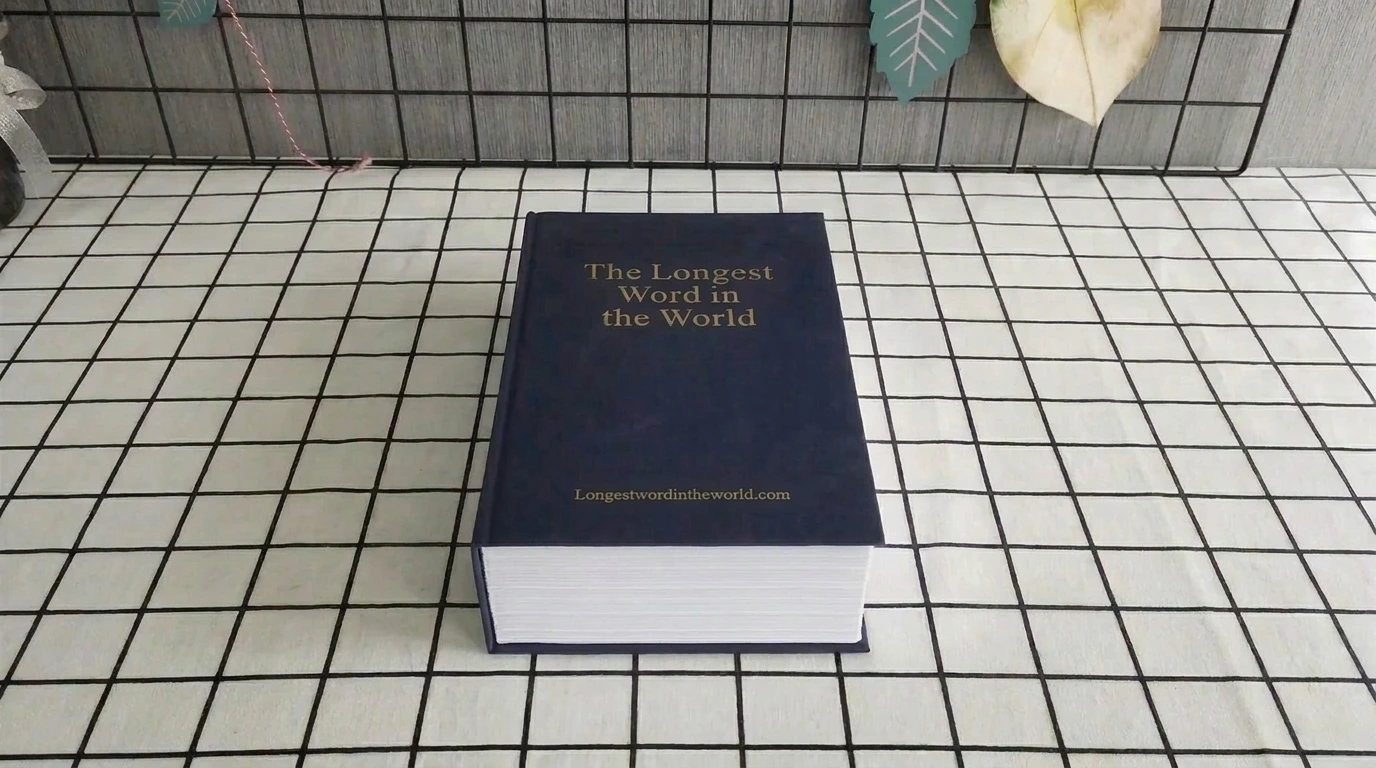
There isn’t just one longest word in the world. There are many, depending on the language, meaning, and definition. Most people have Supercalifragilisticexpialidocious in mind as the longest word, but that’s not quite true. If that’s you too, you’re in for a twist—we dug into every definition of “long” to find the real answer, and it’s quite fascinating!
TL;DR: The Actual Answer:
What you mean by “word” defines the answer.
- If you mean the longest string of letters ever used to name something, it’s the chemical name for a protein called titin. That name runs to 189,819 letters and spills onto 50+ pages.
- If you mean the longest word in an English dictionary, it’s pneumonoultramicroscopicsilicovolcanoconiosis, at 45 letters.
- If you mean the longest word ever in any language, officially recognized by Guinness World Records, it’s a 195-character Sanskrit compound that transliterates to 428 letters in the Latin alphabet.
- If you mean the longest word one could actually use in a sentence, that’s a much shorter list, but we’ve covered that below too.
Below, we break down the world’s longest words on record to show how complex (and beautiful!) they are—sorted in descending order, with the longest word securing the top spot. If you’re looking for long words in your language, head to our language archive.
Top 10 Longest Words in the World
If we rank words purely by the longest string of letters, no matter the language, the top 10 would fill up with useless chemical formulas or one-off jokes.
Since there’s no universally recognized ranking, we’ve ranked the words with the most string of letters and have some recognition. Here are 10 of the world’s longest words and word-like names—the list includes chemical names, literary compounds, dictionary words, and terms from different languages.
- Titin’s full chemical name — 189,819 letters
- Nirantarāndhakāritā…lokān — 428 letters
- Tweedehandsemotor…kondiging — 137 letters
- Muvaffakiyetsizleştiricileştiriveremeyebileceklerimizdenmişsinizcesine — 70 letters
- Vaðlaheiðarvegavinnuverkfærageymsluskúraútidyralyklakippuhringur — 64 letters
- Rindfleischetikettierungsüberwachungsaufgabenübertragungsgesetz — 63 letters
- Lentokonesuihkuturbiinimoottoriapumekaanikkoaliupseerioppilas — 61 letters
- Pneumonoultramicroscopicsilicovolcanoconiosis — 45 letters
- Aufmerksamkeitsdefizit-Hyperaktivitätsstörung — 44 letters
- Hippopotomonstrosesquippedaliophobia — 36 letters
This is a quick-reference list. Scroll down to explore each word in detail, including its meaning, origin, and interesting facts.
Let’s get exploring the world’s longest words, one by one.
Meet Titin: The Longest Word in the World (189,819 letters!)
Titin’s chemical name runs 189,819 letters, starting with methionylthreonylthreonylglutaminyla… and going on for 50+ pages of pure text. Surprisingly, it takes 3+ hours to read (yikes!).
Our bodies contain lots of protein, with titin being the largest. It’s not unusual, but its full name surely is! In chemical naming, a protein’s name must describe every single amino acid in its structure, in order. Titin has 244 protein domains and 26,926 amino acids, which is why the name balloons this much.
This overwhelming length makes dictionaries opt out—yes, titin’s chemical name never made it into one. Most linguists don’t even take it as a real word, nor do we, because this actually isn’t a lexical word, just an ultra-technical chemical name.
Most people who Google the longest word ever in the world don’t really care whether it has a dictionary entry. So, for them, titin’s chemical name is the answer.
The Real Longest Word in the Dictionary
It’s pneumonoultramicroscopicsilicovolcanoconiosis, 45 letters and 19 syllables, and it legitimately holds a dictionary entry. It’s another name for silicosis, a lung disease caused by breathing in very fine silica or quartz dust.
Everett M. Smith coined the word in 1935, deliberately making it the longest word in English to poke fun at long medical terms. It first occurred in a dictionary supplement in 1939, and it remains the official longest technical word even today. Ironic, right? The longest word in the dictionary was basically a stunt.
Despite its manufactured origin, the word has since been used often enough, in something close to its intended medical meaning, that dictionaries like the Oxford English Dictionary now list it as a real entry. Learner’s Dictionary still refuses to include it because it’s a highly specialized stunt word. It breaks into six fused parts—pneumono, ultra, microscopic, silico, volcano, and coniosis.
We challenge you to say it fluently—let us know in the comments if you did!
The Longest Word in Any Language, According to Guinness
Pneumonoultramicroscopicsilicovolcanoconiosis isn’t even close to the longest real word in any language; it’s crowned for being only the longest in English dictionaries.
Guinness World Records lists a 195-character Sanskrit compound as the world’s longest word in literature, translating to 428 letters in the Latin alphabet. It’s surely longer than pneumono…, and it holds its record for poetry, not science. It starts with nirantarāndhakāritā… and ends with lokān.
It appears in a 16th-century work by a court poet of the Vijayanagara Empire in southern India, describing a region near Kanci in present-day Tamil Nadu in extended poetic language. Sanskrit lets writers chain entire strings of descriptive compounds into a single grammatical word, which is exactly how a court poet could describe a landscape in one 428-letter breath.
The Long Words People Get Wrong
These are the words you’d see labeled as the longest, but today, they’re mentioned just as examples of long words. Some dictionaries don’t even count them, and we’re here to clear up why. Let’s get gazing.
Supercalifragilisticexpialidocious (34 letters). Major dictionaries list it as an adjective and a general slang term for excellent, wonderful, or extraordinary, but in Mary Poppins, it’s a clever trick for when you don’t know what else to say. It went viral because of the movie Mary Poppins, which made it feel as if it’s the longest word in the world, but in fact, it isn’t.
Floccinaucinihilipilification (29 letters). It means the act of judging something as worthless. Although the Oxford English Dictionary includes it, some others pass it up. Floccinaucinihilipilification is the longest non-technical English word in major dictionaries, but not the outright longest overall. Guinness World Records once crowned it champion, until pneumonoultra… came and took the title—which’s why some people still repeat the old record.
Antidisestablishmentarianism (28 letters). This non-coined, non-technical, and easy-to-pronounce word refers to opposition to withdrawing government support from the church of England in 19th-century Britain. It obviously isn’t the world’s longest word, and even dictionaries are split on whether to include it. This word never saw much real use in its original meaning, so it never made the cut.
Different Dictionaries, Different Champions
Turns out, different dictionaries crown different words as “longest.”
- The Oxford English Dictionary’s longest coined word is the one we’ve discussed already, Pneumonoultramicroscopicsilicovolcanoconiosis. The non-coined word is pseudopseudohypoparathyroidism, at 30 letters. It refers to a mild hereditary disorder (aka PPHP), and it’s the only word in most dictionaries with a repeated “pseudo.”
- Merriam-Webster’s Collegiate Dictionary didn’t bother to include antidisestablishmentarianism. Its actual longest word is electroencephalographically, at 27 letters, meaning “by means of an apparatus that records brain waves.”
So, depending on which dictionary you’ve got, the answer to your question changes.
The Longest Words You Can Use in a Sentence
Long words are hard to say, let alone remember. Check these tricks out to make saying and remembering long words easy peasy.
Almost every word we’ve discussed so far is either technical, obscure, or was coined specifically to be long—you’d probably never see them in normal writing.
Some long words are long enough that they are rarely used, but some actually do appear in everyday talk.
Linguist Ross Eckler studied this question and found that the longest words in everyday text are deinstitutionalisation and counterrevolutionaries, both stretching to 22 letters.
A different study of over a million samples of everyday English writing found that the longest word a reader would meet regularly is uncharacteristically, which has 20 letters. In the 1990s, incomprehensibilities, 21 letters, briefly took the crown as one of the common long words.
Long Words Around the World
No, English doesn’t hold most of the records on the world list, and if you look at other languages, it barely competes. Languages that build words by gluing smaller units together, called agglutinative languages, can keep adding pieces to a word to make it longer, over and over. Here’s a tour:
Afrikaans
Tweedehandsemotorverkoopsmannevakbondstakingsvergaderingsameroeperstoespraakskrywerspersverklaringuitreikingsmediakonferensieaankondiging, at 137 letters. It translates to “a press conference releasing a media statement about a speech given by a spokesperson at a strike meeting called by a used-car dealership’s trade union.” It reads more like a constructed novelty, but the Total Book of South African Records officially documents it.
Turkish
Muvaffakiyetsizleştiricileştiriveremeyebileceklerimizdenmişsinizcesine, 70 letters, built from the root word for “success,” and means “as if you were reportedly one of those whom we might not be able to easily and quickly turn into a maker of unsuccessful people.” Turkish suffix-stacking can go pretty far, and this word was written exactly to showcase that.
Icelandic
It has its own celebrity long word: Vaðlaheiðarvegavinnuverkfærageymsluskúraútidyralyklakippuhringur, 64 letters. It means a keyring for the outer door of a tool shed used during road construction work on Vaðlaheiði, a mountain pass in northern Iceland. It’s descriptive, not invented as a stunt.
German
The classic agglutinative example is best known for Rindfleischetikettierungsüberwachungsaufgabenübertragungsgesetz, 63 letters. It’s the full name of a beef-labeling supervision law that held the Guinness World Records for the longest published German word until the law was repealed in 2013. It’s obsolete now; no one uses it anymore.
If we talk about the active, longest German word in the official Duden Dictionary, that’s Aufmerksamkeitsdefizit-Hyperaktivitätsstörung, 44 letters. For general standard compound nouns, Kraftfahrzeug-Haftpflichtversicherung (36 letters) is a primary entry.
Finnish
It builds compounds just as freely. Its best-known example is lentokonesuihkuturbiinimoottoriapumekaanikkoaliupseerioppilas, 61 letters, meaning “airplane jet turbine engine auxiliary mechanic non-commissioned officer student,” a military job title that has since been deprecated.
Vietnamese
Nghiêng, just seven letters, meaning “tilted” or “leaning,” is its longest single word. That’s because Vietnamese is an isolating language that builds sentences out of short standalone syllables.
Many (if not all) languages have long words, and each language deserves its own dedicated article covering its longest words. We’ve put in the legwork to research and compile lists for many languages. Check out our language archive for the full list of a specific language. Couldn’t find yours? Let us know through our contact page.
Other Fun Long-Word Records
Here are some smaller but fun records, each measuring beyond raw length:
- The longest English words with no repeated letters, aka isograms, are dermatoglyphics and uncopyrightable, both at 15 letters, and subdermatoglyphic, at 17 letters.
- Squirrelled, with its British double L, is the longest non-coined monosyllabic English word (sayable as a single syllable) at 11 letters. “Screeched,” “scratched,” and “scrunched” are also common nine-letter contenders.
- Tattarrattat, a 12-letter word coined by James Joyce in Ulysses meaning a knock at the door, is the longest palindrome in the Oxford English Dictionary. However, Guinness World Records honors “detartrated” as the longest English palindrome, an 11-letter chemistry term meaning to have had tartrates removed. The absolute overall longest palindrome in any language is the Finnish word saippuakivikauppias, meaning “soapstone seller.”
- Euouae has 6 letters and is the world’s longest word with only vowels, while tsktsks, the plural of the disapproving sound “tsktsk,” is the longest word with only consonants. There’s a longer one with no standard vowels, but it’s obsolete: twyndyllyngs, an old word for twins.
- Strengths is the longest English word with a single vowel letter (monosyllabic) despite being nine letters long. It also holds a Guinness World Record.
- Hippopotomonstrosesquippedaliophobia, 36 letters, means the fear of long words, and yes, the irony is intentional: the word itself is long enough to trigger the very fear it names. People suffering from this phobia might run away the moment they see a long word. It also has a short sibling with the same meaning, sesquipedalophobia, at 18 letters.
Every Long Word in This Article, Ranked by Length
We’ve put together every word mentioned above, ranked from longest to shortest. We left specialty records like isograms and palindromes out of this table as they measure something other than pure length.
| Letters | Word | Language / Type | Meaning |
| 189,819 | Titin’s full chemical name | Biochemistry | Chemical name of the protein titin |
| 428 | Sanskrit compound | Sanskrit | Poetic description of a region near Kanci, Tamil Nadu |
| 137 | Tweedehandsemotorverkoopsmannevakbondstakingsvergaderingsameroeperstoespraakskrywerspersverklaringuitreikingsmediakonferensieaankondiging | Afrikaans | A press conference about a speech at a used-car dealership trade-union strike meeting |
| 70 | Muvaffakiyetsizleştiricileştiriveremeyebileceklerimizdenmişsinizcesine | Turkish | “As if you were reportedly one of those whom we might not be able to easily and quickly turn into a maker of unsuccessful people” |
| 64 | Vaðlaheiðarvegavinnuverkfærageymsluskúraútidyralyklakippuhringur | Icelandic | Keyring for the outer door of a road-construction tool shed |
| 63 | Rindfleischetikettierungsüberwachungsaufgabenübertragungsgesetz | German | Beef-labeling supervision law |
| 61 | Lentokonesuihkuturbiinimoottoriapumekaanikkoaliupseerioppilas | Finnish | Airplane jet-turbine engine auxiliary mechanic non-commissioned officer student |
| 45 | Pneumonoultramicroscopicsilicovolcanoconiosis | English | A lung disease caused by inhaling very fine silica or quartz dust |
| 44 | Aufmerksamkeitsdefizit-Hyperaktivitätsstörung | German | Attention deficit hyperactivity disorder (ADHD) |
| 36 | Kraftfahrzeug-Haftpflichtversicherung | German | Motor vehicle liability insurance |
| 36 | Hippopotomonstrosesquippedaliophobia | English | Fear of long words |
| 34 | Supercalifragilisticexpialidocious | English | Excellent, wonderful, extraordinary |
| 30 | Pseudopseudohypoparathyroidism | English | A mild hereditary disorder |
| 29 | Floccinaucinihilipilification | English | The act of judging something as worthless |
| 28 | Antidisestablishmentarianism | English | Opposition to withdrawing government support from the Church of England |
| 27 | Electroencephalographically | English | By means of an apparatus that records brain waves |
| 22 | Deinstitutionalisation | English | A long word found in everyday text |
| 22 | Counterrevolutionaries | English | A long word found in everyday text |
| 21 | Incomprehensibilities | English | Things that are hard to understand |
| 20 | Uncharacteristically | English | An unusually long word encountered in everyday prose |
| 11 | Squirrelled | English | Long non-coined monosyllabic word |
| 7 | Nghiêng | Vietnamese | Tilted or leaning |
FAQs
Wrapping Things Up
No single answer is universally agreed upon, which is what makes this question interesting. A chemist would brag about titin. An English teacher would say it’s pneumonoultramicroscopicsilicovolcanoconiosis. Guinness World Records would lead you to a Sanskrit poem. Ask a linguist about long words in everyday English, and you’ll get “uncharacteristically”. German gives you the power to create as long words as desired. And if you start looking at other languages, you’ll see how far behind English falls.
Each answer is correct, but each is for a slightly different question.
Fun fact: Long words show how creative and flexible languages can be, and that’s their real charm. Some are either impossible or quite difficult to pronounce, so people seldom use them. Whatever the reason a long word was brought into the world, they all show us an inventive side of languages we don’t pay much attention to.
Didn’t see a long word you expected? We haven’t forgotten it. We’ve covered many more words in our dedicated articles for individual languages, so take a look through our language archive before emailing us “you missed my favorite long word!”